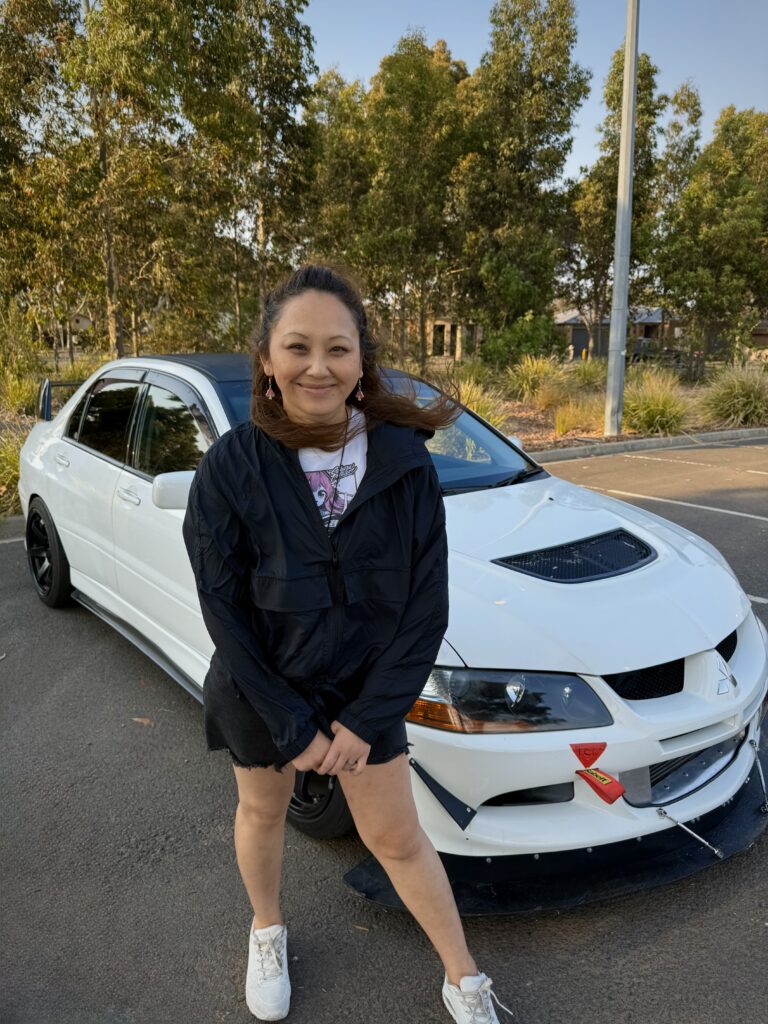
Enjoying the windy walk down St Kilda Beach, checking out the local makers market!
Monthly Archives: January 2026
Journalism at the Crossroads
On paper, entering journalism right now looks irrational.
An industry under pressure. Fragmented audiences. Collapsing trust. Platforms siphoning value. AI rewriting the rules in real time.
Naturally, I walked straight into it.
I’ve always been drawn to systems under strain. Over the past 15 years working in Australia, I’ve moved from one extreme to another — from a hyper-mature, self-cannibalising telco market to an industry still working out what it wants to become. Editorial and news media sits firmly in that in-between decade: less stable, more volatile, and far more revealing of what people actually value.
We live in a world saturated with crisis. Geopolitical conflict. Climate volatility. Social fracture. Logic says this should be journalism’s golden age. A moment where evidence, clarity, and accountability matter more than ever.
The data tells a different story.
The Reuters Institute Digital News Report 2025 shows an industry misaligned with its audience: trust hovering around 40%, engagement slipping, and attention splintering across platforms. The system designed to inform us is faltering at the precise moment it’s most needed.
And yes — I’ve joined right in the middle of it.
The Trust Gap
This isn’t just institutional distrust. It’s cognitive exhaustion.
Globally, 58% of people worry about whether they can tell real news from false information. In some countries, that number climbs above 70%. When more than half the world fears being misled, scepticism becomes the default — even toward legitimate reporting.
Trust hasn’t disappeared. It’s become conditional. And boy, do I have lots to say about Trust (as a Marketer… that’s for another day)
News Avoidance Isn’t Apathy. It’s Self-Preservation.
Forty per cent of people now actively avoid news, up from 29% in 2017.
Not because it’s boring.
Because it’s overwhelming.
The attention economy rewards constant urgency, outrage, and update cycles. Exactly the content that drives people away. Publishers are incentivised to exhaust their audiences, then puzzled when those audiences disengage.
It’s a brutal loop.
The Shift from Institutions to Individuals
A decade ago, news consumption clustered around a handful of platforms. Today it’s fractured across Facebook, YouTube, Instagram, WhatsApp, TikTok, and X — all competing weekly as news sources, all demanding different formats, tones, and compromises.
At the same time, video has overtaken text as the dominant news format. Audiences increasingly want stories told by someone, not by something.
That shift has elevated creators and personalities (commentators, aggregators, explainers) many of whom build trust without bearing the cost of original reporting. People don’t just follow information anymore. They follow filters they trust.
Faceless brands lost something here. Humans filled the gap.
Then Came AI
Under-25s are already using AI chatbots as a regular news source, drawn by speed, simplicity, and relief from ad-heavy sites.
But here’s the tension: audiences expect AI to make news cheaper and faster, while simultaneously believing it will make news less trustworthy and less transparent.
They still want humans in the loop.
Publishers, however, face an existential threat. As AI platforms summarise content directly in search and chat interfaces, referral traffic erodes. Publishers absorb the cost of reporting; platforms capture the attention, loyalty, and revenue.
The risk isn’t irrelevance.
It’s being summarised out of existence.
Local Journalism: The Quiet Collapse
Nowhere is this more visible than local news.
Newsroom employment has nearly halved over a decade. Remaining journalists carry heavier workloads, produce more content, and spend more time on digital output, often while print advertising still underwrites the business.
Platforms have replaced newsrooms as local noticeboards. Community information (classifieds, events, buy-and-sell) has moved elsewhere…. Facebook. What remains for publishers is expensive, original reporting.
Yet many people assume local news is “doing fine,” because headlines still appear. They don’t see the skeleton crews behind them. And so the urgency to subscribe never quite materialises.
Even well-intentioned funding brings trade-offs. Grants shape coverage priorities. It’s not corruption — it’s gravity. And it subtly reshapes what gets investigated, and what doesn’t.
What Still Holds Value
The data is blunt: audiences want journalism that investigates power, explains complexity, and helps them understand the world. Not just react to it.
They want context.
Utility.
Perspective.
Connection.
And, quietly, hope.
One clear outlier exists: long-form audio.
Podcasts attract younger, higher-income, highly engaged audiences. Most listeners say they understand issues more deeply through audio than any other medium. And importantly, they’re willing to pay for it. Not as news, but as education.
Depth, it turns out, still commands attention 🙂
The Uncomfortable Question
If audiences trust individuals more than institutions…
If they’ll pay for depth and transparency…
If personality and credibility now travel together…
Does journalism’s future sit inside struggling organisations or with individual reporters building direct, paying relationships with audiences?
The answer matters. Because it determines whether journalism stabilises or transforms into something fundamentally different.
And Then There’s Automotive
Which brings me to the industry I’ve stepped into.
Sixty per cent of car buyers now rely primarily on digital research, arriving at dealerships informed and decisive. Platforms stripped dealers of their information advantage long ago, just as they stripped newsrooms of micro-moments like classifieds, timetables, and listings.
What remains valuable is expensive, original insight: testing, explaining, contextualising, and holding manufacturers to account.
So if you’re an automotive publisher, the question is simple:
Are you competing on speed and volume — or on trust, depth, and authority?
Because only one of those games is still winnable… well. Those are the cards I’ll play walking into new horizons.
Confidence, Chapters & the Chaos In Between
It’s a new year, and I’m walking into it with a different kind of energy.
Last year, I closed a major chapter — one of those milestones you know will leave fingerprints on you for decades. For me, that chapter spanned three intense, formative years. It was a period defined by transformation: professionally, personally, mentally, emotionally, and in ways I couldn’t have predicted when it began.
The last three years didn’t just shape what I delivered at work. They reshaped how I work, why I work, and who I want to be while doing it.
Looking back, I’m not just proud of what I experienced and delivered, I’m deeply grateful for what it built in me along the way:
- Skills that hardened under pressure
- Grit that sharpened through repetition
- Perspective that only comes after navigating uncertainty at scale
- Empathy that only comes after being treated like your voice doesn’t matter
And the confidence that grows quietly after proving to yourself you can handle more than you once thought possible
And this year?
I get to apply those learned skills to the arenas I’m most passionate about — the places where passion and profession finally overlap.
I strongly believe that life isn’t meant to be compartmentalised into what you’re good at versus what you love. The best version of ourselves exists where those two worlds collide, even if it feels messy at first.
And speaking of collision. That’s exactly what happened when advice from a thought leader landed in my inbox at just the right moment.
The piece used the phrase:
“Fake it till you make it”
It was used as a symbol for how confidence isn’t built. And while I agree entirely with the wreckage that slogan has evolved to mean — confidence by performance, not proof — it triggered a thought in me that went beyond the words on the screen.
It made me reflect on the why.
Not whether the advice was wrong, but why advice like this often fails once it leaves the sender’s hands.
Because so many people heard:
“Fake confidence. Hide the fear. Be someone else.”
When the real intent was likely closer to:
“Start before you feel ready, borrow courage while you build capability.”
For me. It wasn’t the advice that failed.
It was the interpretation layer.
And we all know this, even if we don’t say it out loud enough:
Communication is only effective if the receiving audience interprets it correctly — not if you think you delivered it clearly.
I’ve built campaigns, launched products, delivered stakeholder narratives, and led rooms full of dominant communicators. In every one of those environments, success wasn’t defined by the message that was sent. It was defined by the meaning that was understood.
And confidence?
It works the same way.
It’s not built by memorising motivational slogans or performing like you already own the result. It’s built by:
- Being yourself long enough to learn from failure
- Doing the reps even when you’re still in beta
- Collecting evidence through experience
- Keeping the promises you make to yourself
- Letting rejection and failure become data, not deterrents
And trusting yourself through uncertainty, without needing to look fearless while doing it
So maybe the real lesson isn’t about faking or making at all.
Maybe it’s this:
Say it clearly. Interpret it generously. Act on it bravely.
As I step into 2026, these are the guiding principles I’m taking with me. Not because they’re universal truth, but because they’re the ones that resonate in my bones right now.
And if there’s one thing chaos has taught me, it’s that we’re all still learning. We’re all still interpreting. We’re all still figuring out which principles we’ll subscribe to next.
So here’s mine today.
How about you?